How To Design And Build A Sydney Mardi Gras Float Without The Production Headaches
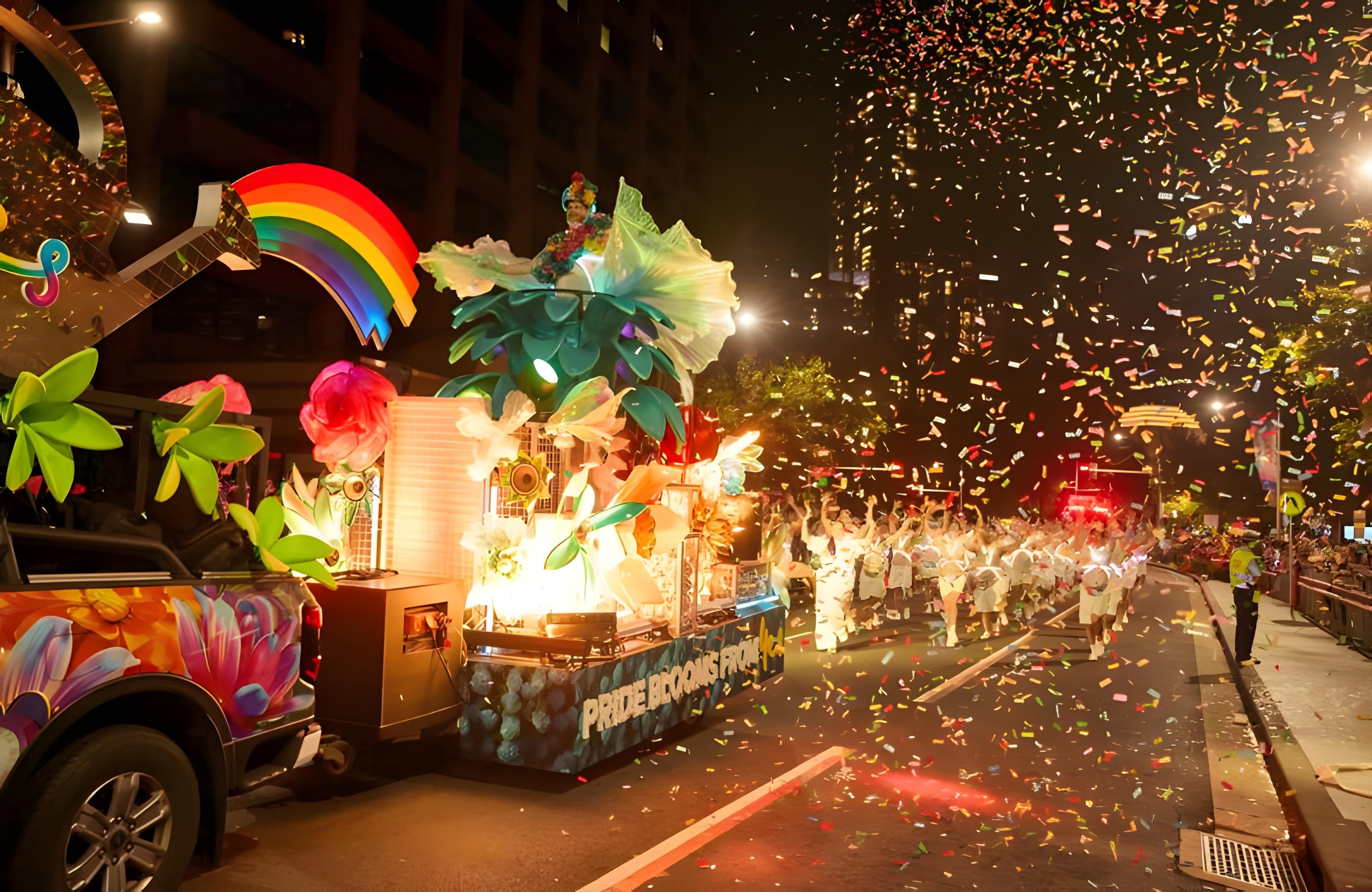
A great Mardi Gras float starts with a big idea.
But turning that idea into something that can actually be built, transported, installed and paraded through Sydney takes more than a great concept.
It takes careful planning, clear communication and a good understanding of what needs to happen behind the scenes.
Because the last thing you want is for production problems to get in the way of a great creative idea.
For agencies, brands and organisations planning a Sydney Mardi Gras float for 2027, here’s what to consider when taking a concept from creative idea to parade-ready reality.
Start With The Creative Idea
Before anyone starts building, the concept needs to be clear.
What is the float trying to communicate?
What should people see from the street?
What needs to make an impact?
And, importantly, what actually needs to be built to make that idea work?
The 2027 Sydney Gay and Lesbian Mardi Gras Parade is centred around the 2027 Festival theme HYPERBLOOM, giving approved entrants a creative direction to consider when developing their parade concepts.
But a strong creative concept is only the beginning. The next step is figuring out how that creative will translate into a physical build.
Get The Creative, Budget And Timeline Working Together
This is where things can get tricky.
A creative idea might look incredible in a render, but that doesn't automatically mean it's practical to build within the available budget or timeframe.
That's why the creative, budget and timeline need to be considered together from the beginning.
A few simple questions can help:
- What will this actually take to build?
- Is there a smarter way to achieve the same visual impact?
- What could cause delays?
- What needs to be decided now?
- What needs to happen before fabrication can begin?
Sometimes the original design needs to change.
Not because the idea isn't good enough.
Because the best creative solution is one that can actually make it through production.
Getting those conversations happening early can prevent a lot of back and forth later.
Design For The Parade, Not Just The Render
A float isn't sitting inside a studio.
It's moving through the streets of Sydney.
That changes things.
The design needs to work as a physical structure, not just as an image on a screen.
You need to think about:
- How it will look from different angles
- How the structure will be assembled
- How it will be transported
- How it will be installed
- What needs to happen onsite
- How everything will be dismantled afterwards
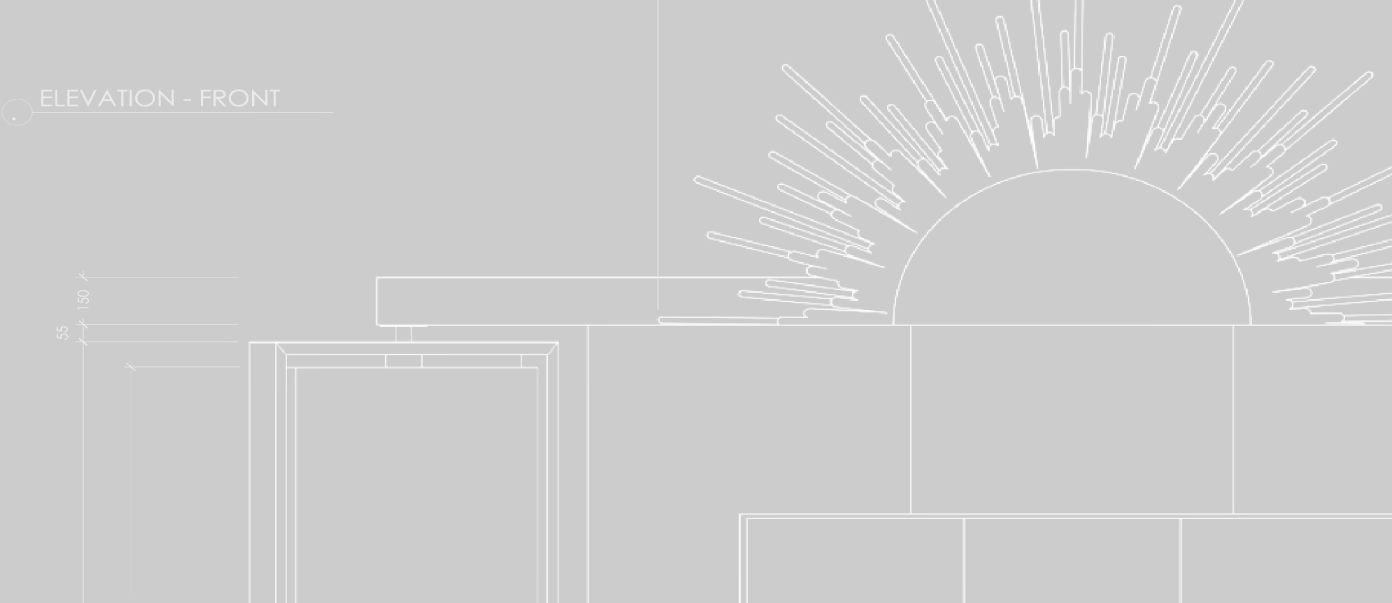
The official 2027 Parade requirements also call for production designs with dimensions, and some successful entrants may need to provide technical drawings, risk assessments or other documentation for review.
So the practical side can't be an afterthought.
It needs to be considered while the creative is being developed.
Bring The Build Thinking In Early
This is one of the easiest ways to avoid production headaches.
A Mardi Gras float might look relatively simple from the outside.
Behind the scenes, there can be a lot to figure out.
How does it actually go together?
What needs to be fabricated offsite?
How do the different elements connect?
What needs to happen before it gets to site?
And what could potentially cause problems later?
These are the questions you want answered early.
Not when the build is already underway.
Not when you're standing onsite.
And definitely not on parade day.
Getting the construction approach sorted early means the creative team can keep focusing on the experience they're trying to create, while the practical details are worked through in the background.
Good Drafting Removes Guesswork
Once the construction approach has been agreed, the concept needs to become something the build team can actually work from.
That's where technical drafting comes in.
The drafting process turns the creative direction into construction plans, giving everyone a clearer understanding of what is being made and how it needs to come together.
Think of it as the bridge between the idea and the physical build.
Good documentation helps answer the questions before they become problems.
What gets built?
How does it fit together?
What needs to be made first?
What needs to happen onsite?
The aim isn't to create more paperwork.
It's to make the production process more predictable.
And when you're working towards a fixed parade date, predictable is your friend.
Fabrication Is Where The Idea Becomes Real
This is where things start to get exciting.
The drawings become physical structures.
The shapes start appearing.
The details come together.
And suddenly, something that only existed as a concept starts looking like the real thing.
But fabrication isn't simply about building what is on the drawing.
Things need to be checked as they come together.
If something isn't working as expected, it's much easier to identify and solve it during production than when you're standing onsite with a deadline looming.
That's why having the project management, drafting and fabrication stages working together matters.
The more connected those stages are, the fewer gaps there are for things to fall through.
Don't Forget What Happens After The Build
Getting the float built is only part of the job.
It still needs to get to the parade, be installed and then bumped out afterwards. For a large parade structure, those logistics can be just as important as the fabrication itself.
That's why it's worth considering how the float will be transported and installed before production begins. Planning these details early helps avoid last-minute complications when the parade date is getting close.
The less that needs to be figured out at the last minute, the smoother the whole experience becomes.
Why Getting The Right People Involved Early Matters
For an experiential producer, the pressure doesn't stop when the creative is approved.
You've still got budgets to manage.
Approvals to chase.
Timelines to protect.
Clients to keep happy.
And a whole lot of moving parts to coordinate.
That's why the construction side needs to be brought into the conversation early.
Not because every creative decision needs to become a construction conversation.
Quite the opposite.
It's about identifying the practical considerations early enough that they don't become problems later.
A build partner should be able to look at the concept and help answer questions around budget, timeline, construction and logistics before production begins.
That gives everyone more certainty.
And it gives the producer one less thing to worry about.
Great Mardi Gras Floats Don't Happen By Accident
The creative idea is only the beginning.
From there, it needs to work with the budget. The timeline needs to stack up. The construction approach needs to be figured out. The concept needs to become detailed plans. Then it needs to be fabricated, checked, transported and installed.
That's a lot of moving parts.
But it doesn't all need to sit on one person's shoulders.
The right process makes the whole thing easier to manage.
At Traction Studio, that process starts with aligning the concept, budget and timeline before moving into project management, drafting and fabrication, followed by delivery, installation and bump-out.
The goal is simple:
Take a great creative idea.
Work through the practical details.
And get it ready for the real world without the production headaches.
Because the best float isn't necessarily the biggest or most complicated.
It's the one where the creative idea and the build work together from the beginning, with every stage considered and every detail worked through collaboratively.
That's what it means to be built precisely, and collaboratively.
Planning a float for Sydney Mardi Gras 2027?
If you'd like to talk through an idea, the build requirements or what's involved, give the Traction Studio team a call on 02 9681 4585 or email hello@tractionstudio.com.au.
Planning a float for Sydney Mardi Gras 2027?
Talk to us about your float concept, build requirements and production timeline. We can help work through the practical details before fabrication begins.
Read More
Project stories, industry insights, and a look inside how Traction Studios brings creative concepts to life.
.jpg)
.jpg)